

No two days are the same for Sarah. As a Family Support Hub Officer at Together for Short Lives, her mornings might start with grant applications, and her afternoons may be filled with calls from parents who are struggling to navigate services – and so much more in between.
That variety is at the heart of what the Family Support Hub does. Led by Family Services Manager Lynsey, the team is there for families of seriously ill children, as well as the professionals who support them.
“Families can call us for any reason, any need, any query they might have,” says Lynsey. “It might relate to the care of their child, how they’re feeling or the practical circumstances they’re trying to navigate.”
A typical morning
Sarah’s day begins at 9am. After a check of her diary, the team comes together for a morning huddle. A chance to share updates, flag urgent cases and make sure that nobody is carrying something alone.
Then comes the inbox check. Emails from parents, nurses and social workers, voicemails from families who rang late the night before. Sarah reads and listens carefully to each one before calling back. Her approach is always to talk first rather than sending overwhelming lists of information and resources. It takes skill to know what a family needs in that moment and the hub team bring years of training and experience to every call.
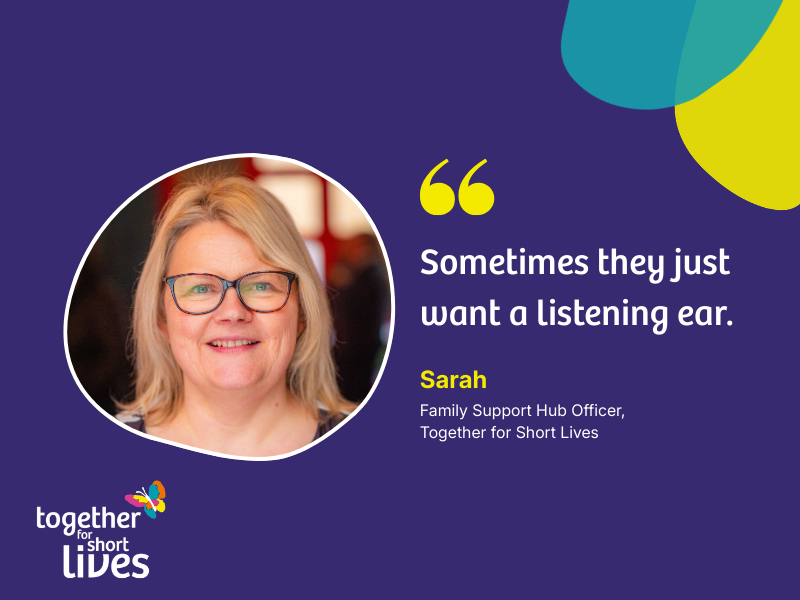
“Before sending lots of information, I call to see where they are in their journey,” she explains. “Sometimes they just want a listening ear.”
Meeting families where they are
The situations families find themselves in are often incredibly difficult – beyond what many of us could imagine. A parent may have had to give up work to care for their child, they may be in a position where they have to explain to siblings why their brother or sister is poorly, or they may be dealing with bereavement. And for those families, the challenges don’t stop with their grief – families are often faced with benefits suddenly stopping, specialist equipment being collected from the home, and the network of medical professionals that once surrounded them drift away.
“Families are navigating all these raw emotions that are right on the surface when their child has died,” says Lynsey, “and on top of that, they’re facing really difficult circumstances around finances and the practicalities of their home situation. Parents can find themselves in a really difficult situation of how they can cope – they are simply not ready to think about going back to work.”
The Hub can help with grants and financial support, short breaks, energy bills, guidance around accessing local services and more. But often what a family needs most is someone who will listen without judgement.
Rewarding, but challenging
By mid-afternoon, Sarah would usually be updating case notes, following up on grant applications and checking in with colleagues to debrief on the day’s calls. But beyond that, the work can be emotionally tiring, and at times, Sarah may need to check in with a colleague after particularly difficult calls.
“The job can be very emotive. It can be very sad on some days,” Lynsey admits “but it’s also incredibly rewarding and we pride ourselves in just being able to help families in really difficult circumstances.”
If you’re a family worried about whether to pick up the phone and contact the helpline, Lynsey has a simple message: “Please don’t be worried. We’re humans at the end of the phone and we’re professionally trained. No two families are the same and we know that – we want to help you in your journey.”
Want to hear more? Watch Lynsey talk about the work, the families, and why no two days – or families – are ever the same.
Get in touch
If you or someone you know could benefit from the support of our Family Support Hub, please don’t hesitate to reach out by clicking the button below.